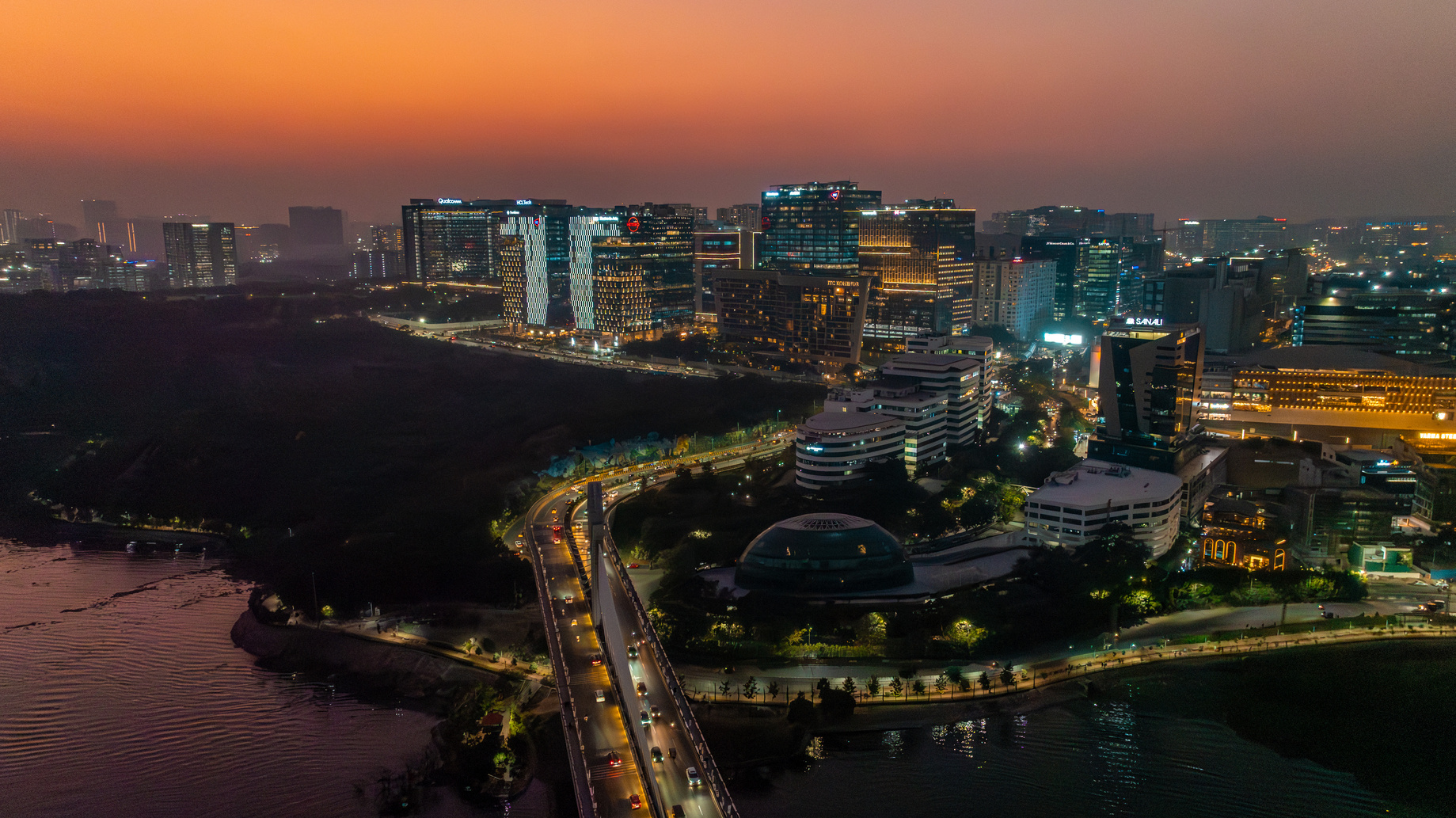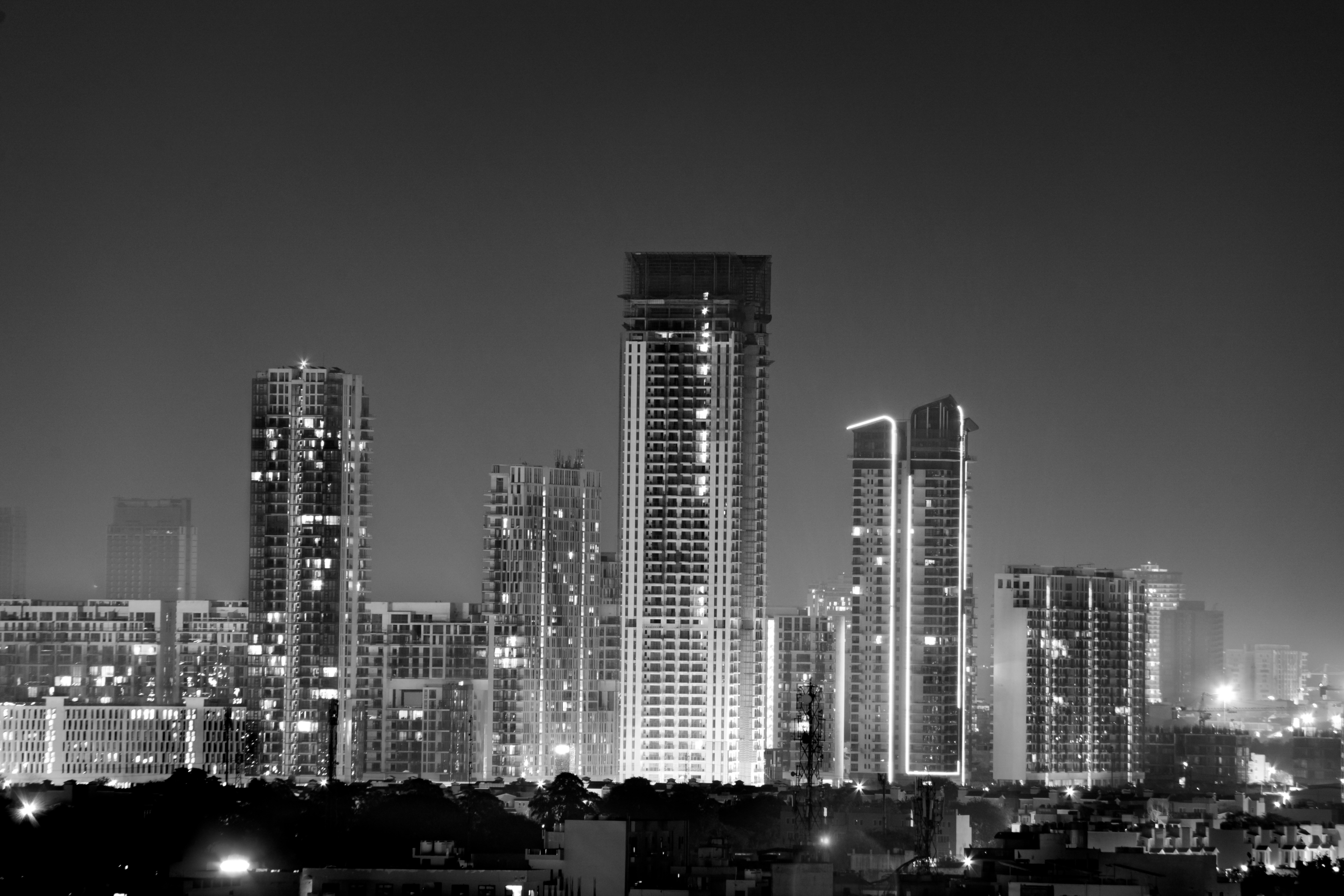
Hyderabad is winning the kind of momentum most cities only pitch in investor decks. Tech demand holds firm. Capital keeps arriving. Towers now rise routinely in neighborhoods that struggled to clear mid-rise a decade ago. From a distance the skyline reads like a finished success story.
The harder question is direction. Where is that skyline actually headed? Today the answer is everywhere at once.
The cities that turned their skylines into icons never let height sprawl in every direction. New York packed its towers into Midtown and Lower Manhattan. Singapore grows vertically only where the MRT grid can absorb the load. London, for all its sprawl, polices height through view corridors and steers tall buildings into Canary Wharf and the City. None of this happened because developers wanted it. These cities drew lines to keep their systems intact.
Hyderabad skipped that step. Near-unlimited FSI applies across most of the map. The policy made building faster and cheaper exactly when the city needed to prove itself. It worked. The cracks are starting to show anyway. Traffic is the loudest symptom. Office corridors that ran quiet a few years ago now seize up by morning. Cars multiply every year while road capacity barely moves. A metro that should have anchored vertical growth still skips most of the hottest pockets. Water and sewage lines are stretched so thin that private workarounds have become the default. None of this is a passing glitch. It is wired into how the city is expanding.
Developers are simply following the incentives. Build tall wherever demand runs hot. The result is density scattered at random across a city that has the land to spread growth with some logic. Instead of dense clusters bound to strong transit, Hyderabad is stacking towers into zones that still behave like suburbs. That means longer commutes and more friction in the ordinary business of getting through a day.
Livability splits along the same line. Most new inventory chases premium buyers. The families and workers who actually power the tech economy get pushed outward, into areas where services trail construction by years. No city builds loyalty that way.
Hyderabad does not need to imitate anyone. It needs to respect what the best skylines learned the hard way. Height should be earned by the ground beneath it. Transit capacity. Utility resilience. Public space and affordability. When those numbers are strong, density turns into an asset instead of a tax on daily life.
There is still room to get this right. The Outer Ring Road is a rare advantage, enough open canvas to seed new districts with modern planning built in from the start. The goal is not to stop building. It is to stop building blind. A skyline dazzles from a distance. A city is judged by what it feels like at 6 pm on a Tuesday. Hyderabad has reached the point where its future turns less on height and more on discipline. Smart zoning can protect the momentum and keep everyday life moving at the same time. Steer the towers into the right zones and the city wins twice. Growth stays strong. Livability holds.
That is how real global cities do it.