A single acre in Hyderabad has transacted at ₹237 crore. The figure invites an immediate verdict, and most of the market has supplied one. Our perspective is informed by experience across cycles, and we would frame the question with more discipline. The relevant issue is not whether an acre can command ₹237 crore. It is whether the rental economics required to underwrite that basis will materialise, and prove durable.
Anchor on the right unit of value
Most of the commentary benchmarks the price against the wrong denominator. It measures ₹237 crore against an acre of land. Value in this transaction is not a function of the land. It is a function of the buildable envelope above it.
Telangana removed fixed floor space index limits in 2006. A developer in Mumbai or Bengaluru operates within a hard cap on buildable area or pays a premium to exceed it. A developer in this corridor compounds floor plates until engineering, building services and aviation clearances become the binding constraint. Recent height relaxations across the technology belt have relaxed that constraint further, and the development thesis here now contemplates towers well beyond thirty storeys.
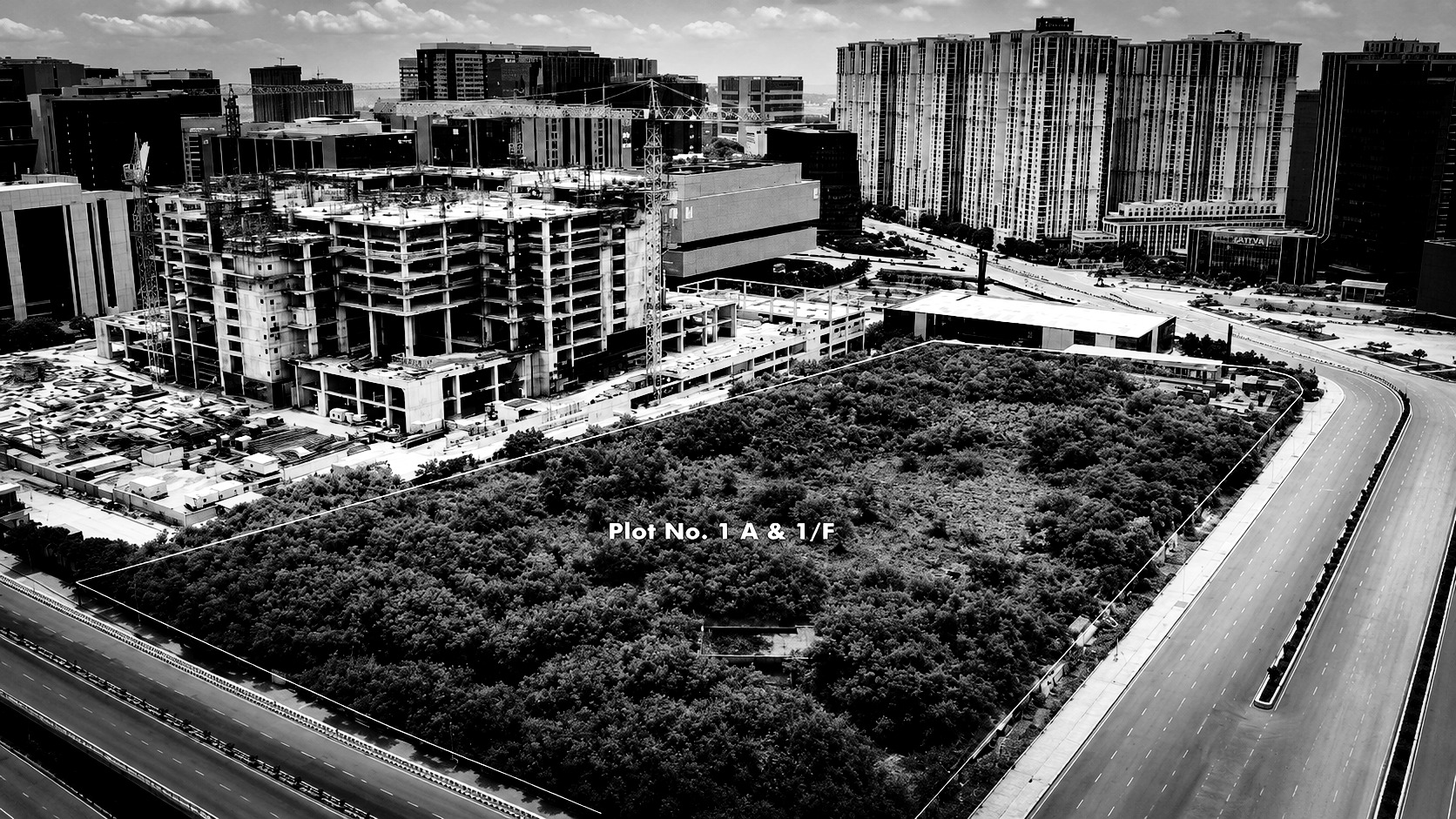
Normalised to the correct denominator, the basis is rational. An acre is 43,560 square feet. At a floor space index of 10 the parcel yields roughly 435,600 square feet, which amortises the land cost to approximately ₹5,440 a square foot. At a floor space index of 12 it compresses to about ₹4,535. The buyer is not capitalising ₹237 crore of land. The buyer is capitalising ₹4,500 to ₹5,400 for every saleable square foot of premium product on a single footprint. On a per-acre basis the price reads as an outlier. On a per-saleable-square-foot basis it reads as disciplined underwriting.
What the basis actually secures
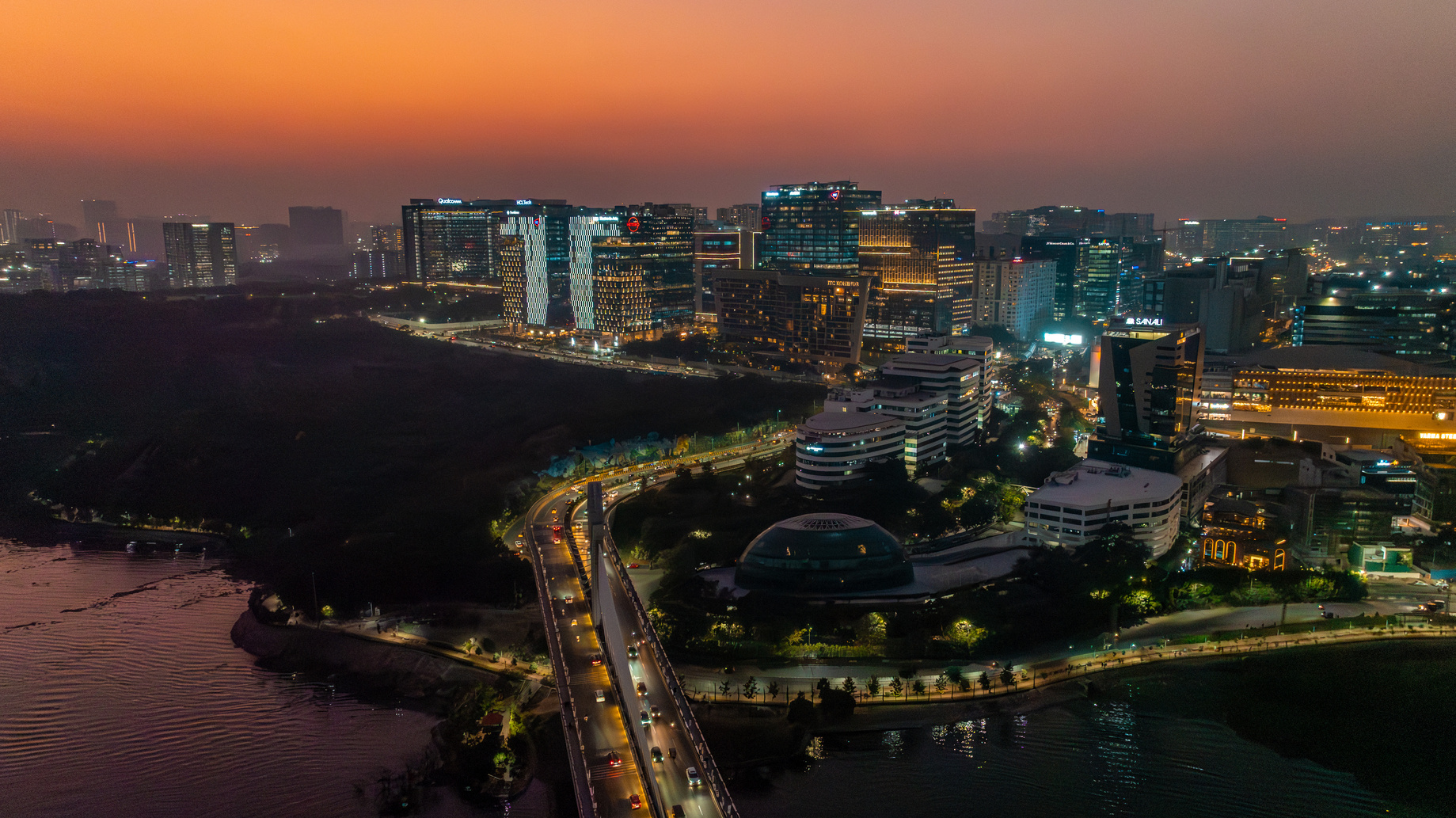
Location underpins the balance of the thesis. The asset sits at the centre of the Raidurg technology cluster, framed by wide arterial roads and adjacent to established office campuses and a flagship innovation hub. It ranks among the last large TSIIC land parcels in the core available without title overhang or assembly risk. The multinational occupiers and capability centres that anchor this submarket will pay a premium to remain inside such a cluster, because proximity compresses commute times, eases the talent agenda and keeps them adjacent to the labour pool their competitors are also targeting. Core product of this grade is structurally insulated from the vacancy that erodes performance on the periphery.
A degree of analytical discipline is warranted here. The scarcity is in core land. It is not scarcity in deliverable office stock. Unlimited floor space index, combined with a forthcoming pipeline of supertall towers, is precisely the mechanism that continues to add supply even as developable plots are exhausted. The land-scarcity thesis and the space-scarcity thesis are therefore in tension, and a rigorous view does not lever the first to validate the second.
The assumption that drives the outcome
This is the inflection point at which arithmetic yields to judgement, and it is the single variable that governs whether the basis performs. To carry a cost basis of this magnitude and still clear a yield-on-cost of 8.5 to 9.5 percent, the towers on this site will need to command rents in the order of ₹130 to ₹150 per square foot a month. The provenance of that number is the critical point. It is not an observed market clearing rate. It is a figure reverse-engineered from the basis and the buyer's required return. The basis dictates the rent that is required. It does not de-risk the assumption that tenants will pay it.
The delta is material. The most relevant comparable, a tower under construction immediately adjacent, is reportedly guiding to ₹120 to ₹140. The rent this transaction depends on therefore sits at or above the top of the comparable's range. The buyer is not underwriting the prevailing market. The buyer is underwriting a market that must run hotter than the present and sustain that level through to delivery, a four-to-six-year horizon.
The supporting evidence is substantive. Core vacancy is compressed, capability centre absorption is running at a steady pace and the inventory of large, clean parcels in the core is close to exhausted. In aggregate these make ₹130 to ₹150 a defensible base case rather than an aspiration. It remains a base case. We would have a client see, explicitly, the single assumption on which the return is levered, rather than treat the rental rate as de-risked.
Where the risk concentrates
A disciplined assessment stress-tests the downside, and the genuine risk does not sit in the auction. It sits in the holding period that follows.
The first vector is demand. Capability centre growth is real, but it is a derivative of global technology hiring and cost-arbitrage economics, and both are cyclical. A long vertical programme converts present strength into a position on future strength. The question is not whether demand is firm today. It is whether it clears ₹130 to ₹150 at the point of delivery.
The second vector is supply. The adjacent parcel, a little over five acres in the same survey number, was sequenced for auction almost immediately behind this one. The same dynamics that frame this bid as scarcity value will introduce incremental premium supply onto the same micro-market, which erodes the pricing power embedded in the underwriting.
The second-order effects
If the basis establishes itself as a reference point, several second-order effects are probable, and we would hold them as probabilities rather than certainties. Owners of existing Grade-A inventory across the premium western submarkets will mark to this benchmark when setting ask prices, lifting area valuations by reference. The flight to quality will sharpen, as occupiers able to absorb ₹130 to ₹150 concentrate in the core while cost-sensitive demand migrates to the fringe corridors, widening the spread between the two. The competitive set narrows, because once the entry ticket for core land clears ₹1,500 crore the mid-market regional developer is structurally excluded, and the core consolidates around national platforms, institutional capital and well-capitalised local houses able to fund a long-gestation build.
The bottom line
One feature of the process carries more signal than the headline premium. The bid cleared 70.5 percent above the ₹139 crore reserve, beyond the typical 30 to 50 percent, but that is better read as a conservatively set reserve than as an isolated overpay. The salient point is that other serious bidders converged close to the same level. The price was not one party's conviction in isolation. It was a market-clearing judgement reached by competing capital, which is a more robust foundation than a single outlying bid.
Our read is clear, and it resists the verdict either camp prefers. As land in isolation, an acre does not support ₹237 crore. As an option on dense premium product in a location few others can replicate, it can support precisely that, conditional on the rental thesis materialising. The arithmetic holds at the densities this corridor permits. The return is levered to a rent a step above the best comparable, sustained through a multi-year build. The convergence of the competing bids indicates the broader market shared the buyer's read of the asset.
For the clients we advise, the implication is operational. This is neither a bubble nor a certainty. It is a high-conviction position built on a sound floor and a rental assumption that has yet to be validated. Exposure to this corridor should be sized to the rent assumption rather than the headline, absorption trends and the sequenced parcels should be monitored closely and ₹130 to ₹150 should be treated as the pivot on which the thesis turns. Clarity on what to do, conviction in why it is right and alignment with long-term value follow from that discipline.